Business Intelligence Strategy, Governance & Center of Excellence
Elevating Data-Driven Decision-Making with Strategy, Structure, and Scalability
At AIM Technologies, we empower organizations to unlock the true value of their data by delivering comprehensive Business Intelligence (BI) strategies, governance frameworks, and Centers of Excellence that drive adoption, trust, and measurable business impact. From defining strategic vision to operationalizing platforms and enabling users, we transform organizations into insight-driven, agile enterprises.
BI Strategy & Platform Modernization
Turn Insights into Action with Scalable BI Solutions
We help organizations transition from legacy reporting systems to modern analytics ecosystems that support decision-making at every level—operational, tactical, and strategic.
Our Approach

Platform Selection & Modernization
- Cloud-based, hybrid, or on-premise deployment guidance
- Structured, outcome-driven methodology
- Minimized vendor lock-in with composable architectures
- Future-proof investments aligned with evolving business needs

Decision-Centric Design
- Systems that enhance how decisions are made, monitored, and optimized
- Support for full spectrum of decision styles across the organization
- Integration of descriptive, predictive, and prescriptive analytics

Platform Interoperability & Integration
- Deep expertise in Power BI, Tableau, Looker, Qlik, Pyramid Analytics, and more
- Seamless integration into existing ecosystems
- Embedded analytics for customer-facing apps and internal portals
- High scalability with consistent UX and governance

Unified Data & AI Workflows
- Architectures supporting descriptive dashboards to predictive modeling
- Integration with Azure Synapse, Power BI, and Azure Machine Learning
- Unified approach bridging BI, data science, and AI initiatives
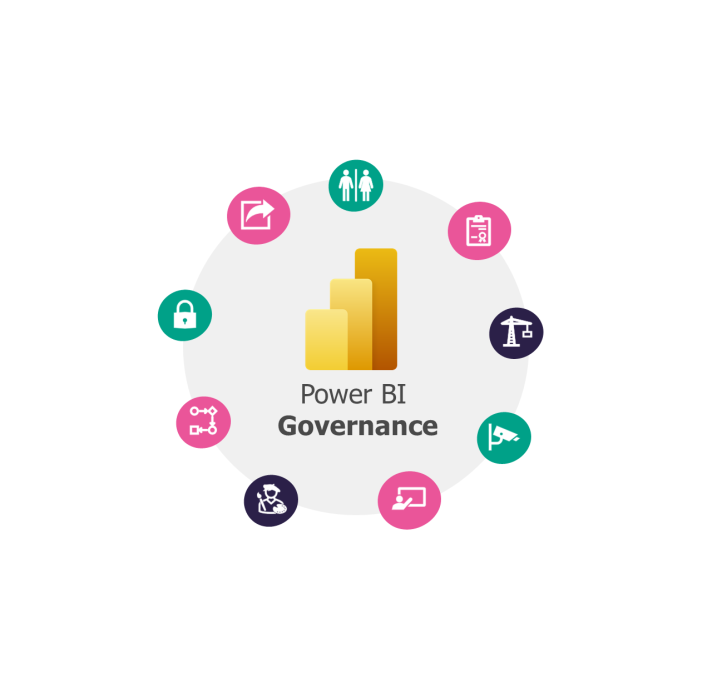
BI Governance Framework
Building Trust, Consistency, and Accountability in Analytics
BI Governance is the backbone of trustworthy analytics, ensuring the right people have access to the right data at the right time—securely and consistently.

Core Governance Components
Data Ownership & Stewardship
- Clear roles and responsibilities for data integrity and usage
- Definition of decision rights across the organization
- Quality metrics and stewardship accountability
Access & Security Controls
- Role-based access and data cataloging
- Compliance, confidentiality, and auditability frameworks
- Integration with identity management systems
Data Quality & Standardization
- Enterprise-wide KPI definitions and reporting logic
- Consistent business rules and calculation standards
- Report rationalization to eliminate redundancy
Metadata & Lineage Management
- Tracking data origins and transformation paths
- Semantic modeling and metadata management
- Impact analysis for changes and dependencies
Platform & Tool Rationalization
- Consolidation of BI assets across departments
- Unified reporting standards and shared data models
- Reduction of shadow IT and overlapping tools
Governance Dashboards & Monitoring
- CoE performance KPIs and adoption metrics
- Data quality scorecards and trust indicators
- Usage analytics driving continuous improvement
Governance Benefits
Our governance framework blends IT discipline with business agility, delivering:
- Minimized risk and enhanced user trust in insights
- Sustainable BI use with reduced operational overhead
- Faster time to insights with governed self-service
- Compliance readiness and audit transparency
Center of Excellence (CoE)
A Centralized Force Multiplier for Analytics Excellence
A BI CoE standardizes best practices, accelerates innovation, and scales insights across your enterprise—acting as the hub for strategy, enablement, and continuous improvement.

CoE Core Functions
Strategy & Roadmap Planning
- Alignment of analytics with business goals and priorities
- Technology evaluation and architecture decisions
- Maturity assessments and capability roadmaps
- Network latency reduction (traffic routing, load balancing, caching)
Standards & Best Practices
- BI policy design and enforcement
- Reusable assets: dashboards, data models, KPIs, governance templates
- Design patterns and development standards
Analytics Community Building
- Power user networks and internal champions
- Analytics influencer development programs
- Cross-functional collaboration forums
Tool & Platform Excellence
- Power BI governance and administration
- Azure Synapse, ADF, and modern data warehouse integration
- SSAS (Tabular) and OLAP modeling expertise
- Performance tuning and optimization
Continuous Improvement
- Feedback loops and usage analytics
- Innovation pilots and proof-of-concepts
- Measurement of business outcomes and ROI
- Performance tuning and optimization
CoE Operating Models
Whether centralizing BI functions or enabling decentralized, self-service analytics, we design CoE models that ensure:
- Operational efficiency and consistency
- Continuous improvement culture
- Balance between standardization and flexibility
- Sustainable scaling of analytics capabilities
Self-Service Analytics Enablement
Empowering Users While Maintaining Control
We implement frameworks that balance agility and governance, enabling teams to create their own dashboards and visualizations without compromising data quality.

Phased Implementation Approach
Phase 1: Strategy
- Self-service readiness assessment
- Governance model definition
- Platform selection and architecture design
Phase 2: Pilot
- Controlled rollout with selected user groups
- Governed data layers and semantic models
- Feedback collection and refinement
Phase 3: Launch
- Training and support infrastructure
- Monitoring and optimization
- Scaled deployment across departments
Phase 4: Scale
- Enterprise-wide adoption
- Advanced capabilities enablement
- Continuous evolution and innovation
Intelligent Analytics Features
Augmented Analytics
- Natural language query (NLQ) interfaces
- Automated insights and anomaly detection
- AI-powered recommendations
Decision-Centric Workflows
- Embedded analytics in business processes
- Low/no-code interfaces for business users
- Data storytelling capabilities
- Contextual insights at the point of decision
BI Training & Enablement
Building a Data-Fluent Workforce
True BI success depends on the people who use it. Our training and enablement services empower every stakeholder with the skills, tools, and confidence to make smarter decisions.

Role-Based Training Framework
Phase 1: Understand
- Foundational BI literacy
- Clear, contextual instruction
- Data concepts and terminology
Phase 2: Apply
- Hands-on practice with real scenarios
- Role-specific use cases
- Tool proficiency development
- Embedded BI in everyday tasks
Phase 3: Design
- Advanced capabilities for power users
- Data modeling and performance optimization
- Analytics leadership and championing
Why AIM Technologies?
Comprehensive BI Excellence
- Human-Centered Enablement: Training aligned with job relevance, role expectations, and user motivations for sustained behavior change
- Enterprise-Ready: Scalable solutions for organizations of all sizes with robust governance
- Project-based Value-Focused: Every engagement tied to measurable business goals and outcomes
- ROI-Driven: Focus on faster decision cycles, increased productivity, and demonstrable value
- Cloud-Agnostic: Support for Microsoft Azure, AWS, Google Cloud, and hybrid environments
- Proven Frameworks: Industry-tested approaches for BI transformation
Use Cases We Solve
- Migrating from legacy BI tools to modern platforms
- Rolling out governed self-service analytics across departments
- Embedding dashboards into SaaS applications or customer portals
- Improving BI adoption and organizational data literacy
- Reducing overlapping tools and eliminating data silos
- Aligning analytics strategy with business outcomes
- Building sustainable Centers of Excellence
- Scaling analytics capabilities across the enterprise
Business Alignment & Change Management
Driving Adoption Through People and Process
Technology alone doesn't drive BI success—cultural change and stakeholder engagement are critical.

Change Management Services
Stakeholder Engagement
- Executive sponsorship development
- Business case development and communication
- Cross-functional alignment workshops
Adoption Strategy
- Communication plans and awareness campaigns
- Success stories and value demonstration
- Incentive structures and recognition programs
Feedback Loops
- Usage analytics and adoption tracking
- User satisfaction surveys
- Continuous refinement based on insights
Business Outcome Measurement
- Faster decision cycles and time to insights
- Increased productivity and self-sufficiency
- Higher adoption rates across user personas
- Measurable ROI from BI investments
Enablement Programs
Upskilling and Reskilling
- Customized learning journeys by role and skill level
- Blended learning approaches
- Project-based practice
- Ongoing mentorship and support
Analytics Influencer Development
- Internal champion cultivation
- Peer network building
- Best practice promotion
- Social proof for adoption
Just-In-Time Learning
- AI-enhanced training environments
- Microlearning modules
- Interactive tutorials and embedded tool tips
- Content hubs supporting workflow integration
Training Delivery Methods
- Live workshops and hands-on labs
- Sandbox environments for safe experimentation
- Online modules and self-paced learning
- Real-world use cases and business scenarios
Ready to Transform Your BI Organization?
Whether you're establishing your first Center of Excellence, maturing your governance framework, or scaling self-service analytics across the enterprise, AIM Technologies provides the expertise and proven methodologies to drive adoption, innovation, and competitive advantage.
Let's build a data culture that performs.
Contact us today to explore how we can design and lead your BI Strategy, Governance, and CoE transformation.

5255 Orbitor Dr #502 Mississauga,
ON L4W 5M6, Canada

